


What are Japanese car auction prices really? Not the asking price on an export website, and not the start price on the auction sheet. The number that matters is the hammer price: what the car actually sold for.
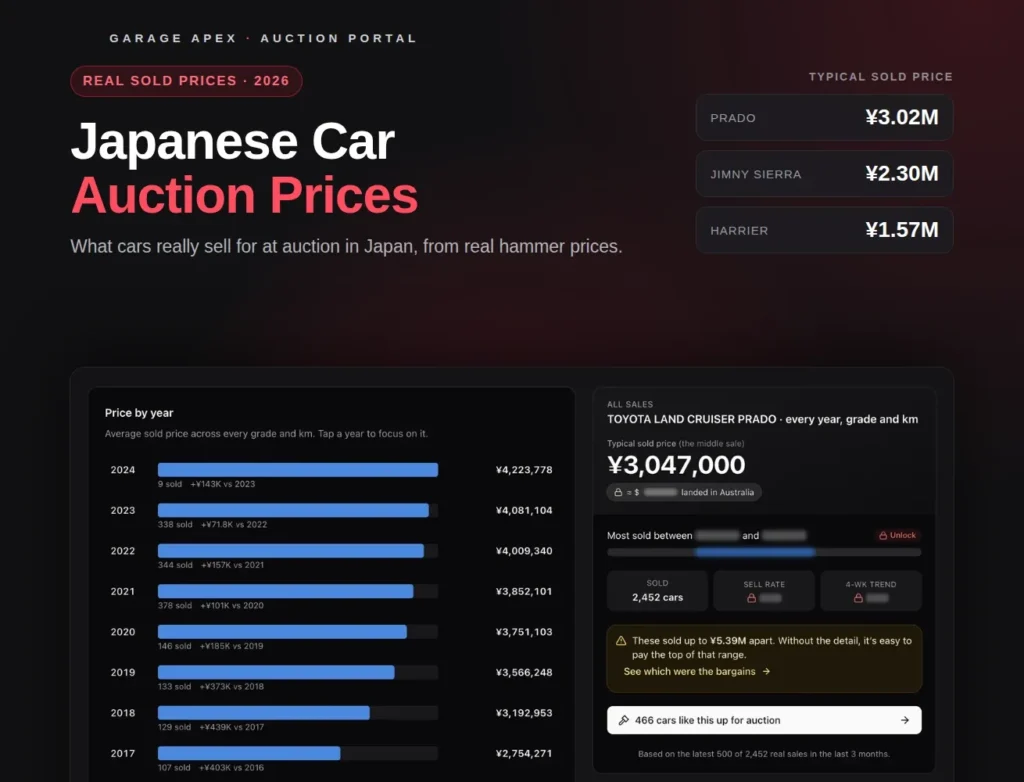
This guide uses real sold prices from the Garage Apex Auction Portal’s Price Guide, covering every car sold at Japanese auctions in the 3 months to 26 October 2026. Here’s what popular models sold for, why prices for one model can vary by millions of yen, and how to check any car before you bid.
Start price, asking price and hammer price
Three prices get mixed up, and only one tells you what a car is worth:
- Start price. Where bidding opens. Many cars start at ¥1,000, so it tells you almost nothing.
- Asking price. What an exporter lists a car for. It includes their margin and isn’t a market price.
- Hammer price. What the car actually sold for at auction. This is the one to use.
Cars that are passed in, meaning bids didn’t reach the seller’s reserve, don’t have a hammer price, only the highest bid. Our Price Guide leaves them out, so every figure below is a real sale.
What popular models sold for
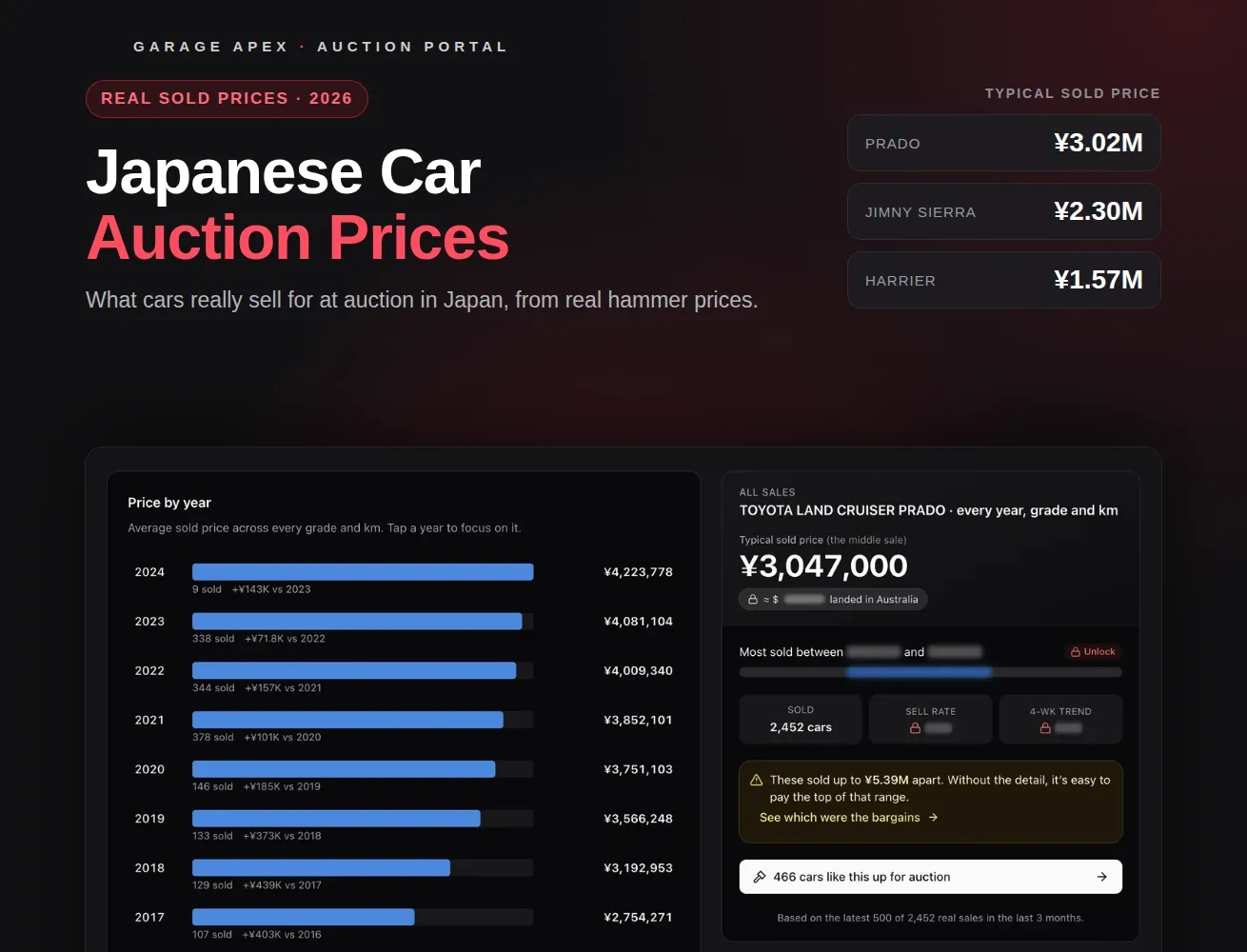
These are the models most popular with Australian buyers, with how many sold at Japanese auctions in the 3 months to 26 October 2026 and the typical sold price (the middle sale) across all years and grades:
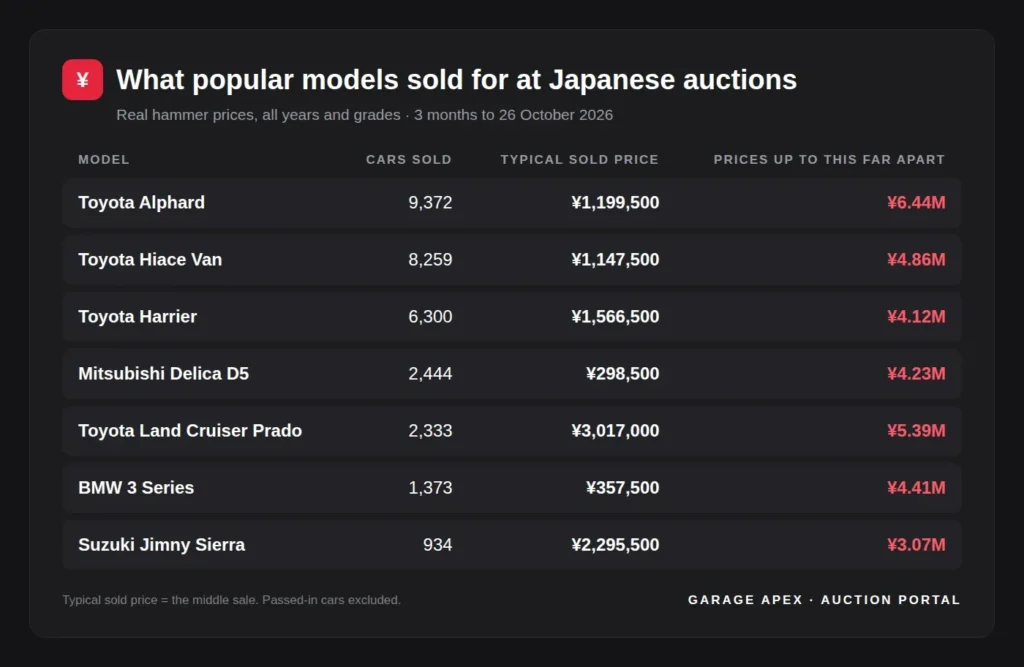
Rarer cars sell in tiny numbers: only 19 Toyota Supras and 10 Nissan GT-Rs in the same period.
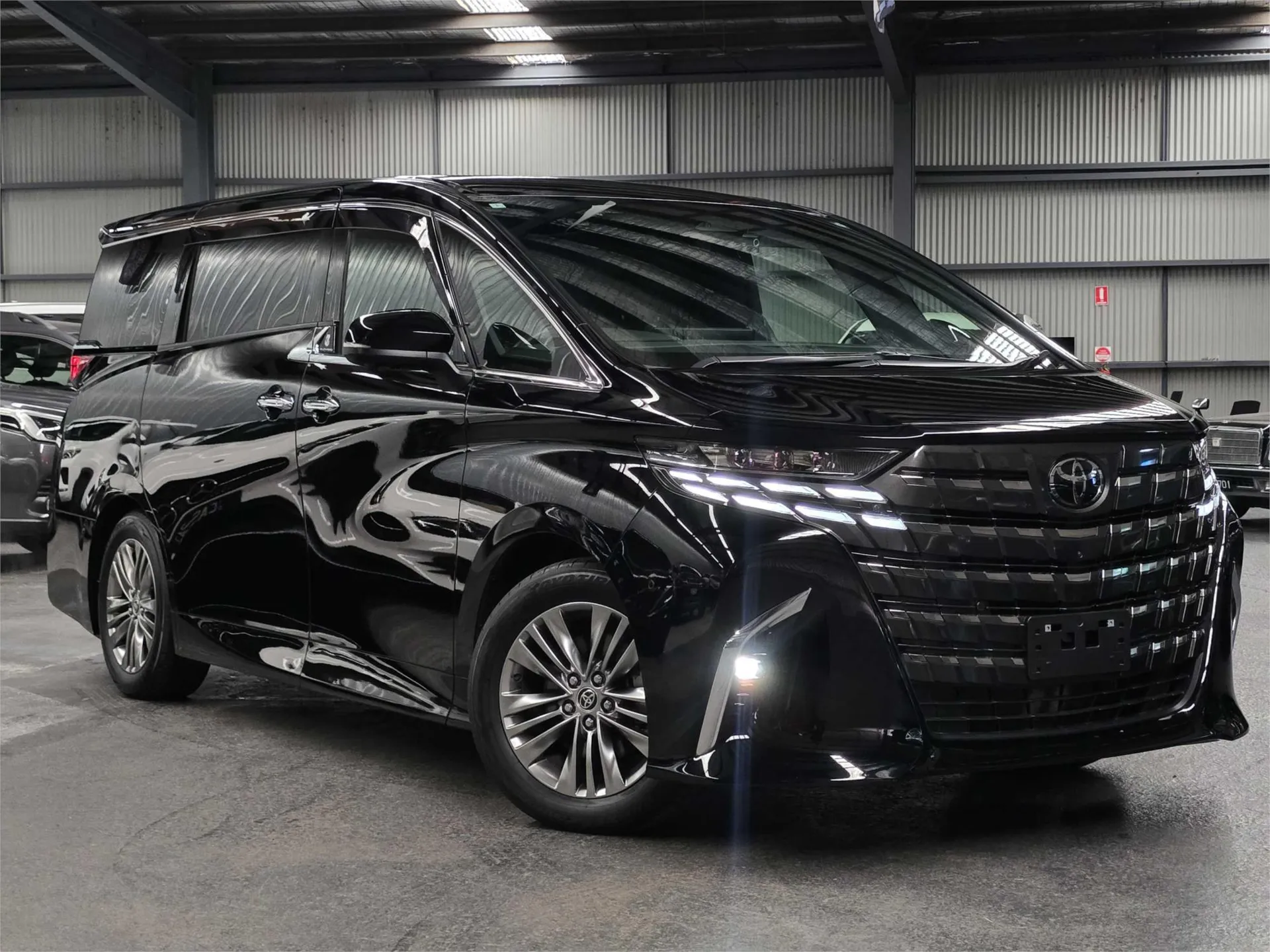
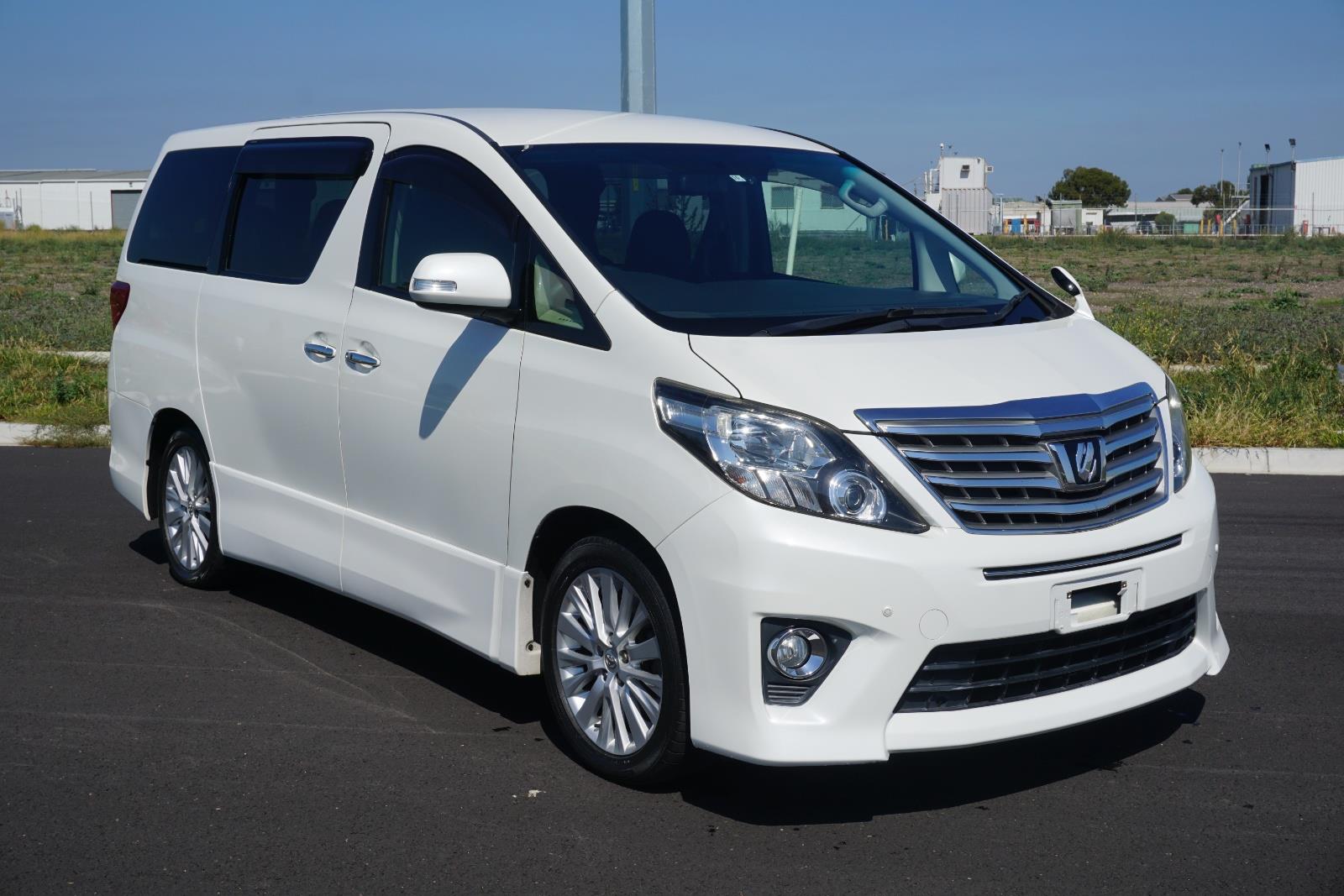
Typical prices across all years include much older cars, which is why the Delica D5 and BMW 3 Series look cheap. Narrow it down and the picture changes: a 2025 BMW 3 Series averaged ¥4,043,333, and the AGH30 Alphard (2015–2023) typically sold for ¥2,603,500. At the exchange rate on 26 October 2026 (about ¥110 to the Australian dollar), the Prado’s ¥3,017,000 is roughly $27,300 before any import costs.
Why prices for one model vary so much
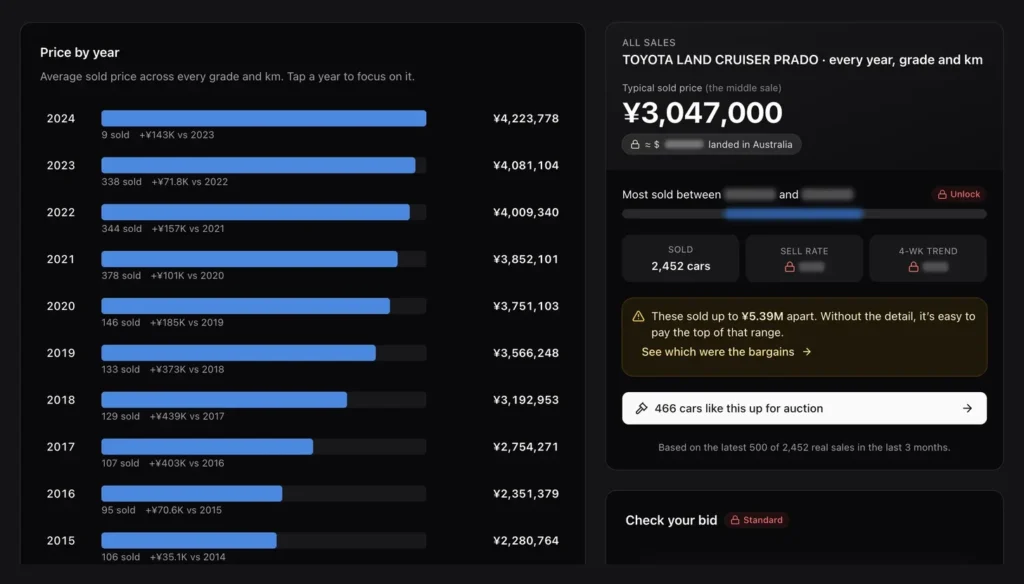
A typical price is a starting point, not a valuation. Four things move the price of an individual car.
Build year. Newer cars cost more, and the jump between years isn’t even. A 2015 Prado averaged ¥2,303,390 and a 2024 averaged ¥4,246,125. A 2015 AGH30 Alphard averaged ¥1,287,926 and a 2023 averaged ¥3,666,009. For the BMW 3 Series, a 2016 averaged ¥751,063 and a 2025 ¥4,043,333.
Auction grade. For 2022 AGH30 Alphards, grade 4.5 cars sold for ¥749,556 more on average than grade 3 cars.
Kilometres. For the same Alphards, cars under 79,000 km sold for ¥338,774 more on average.
Chassis and trim. One model name can cover several generations and specs. That’s why the Price Guide lets you filter by chassis code: the Prado alone has more than 20.
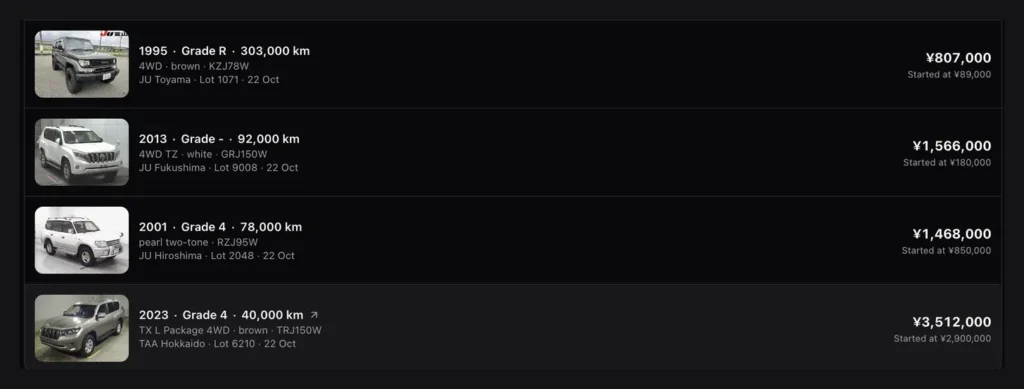
What auction grades mean
Grades are the quickest way to compare condition, and they move the price more than most buyers expect.
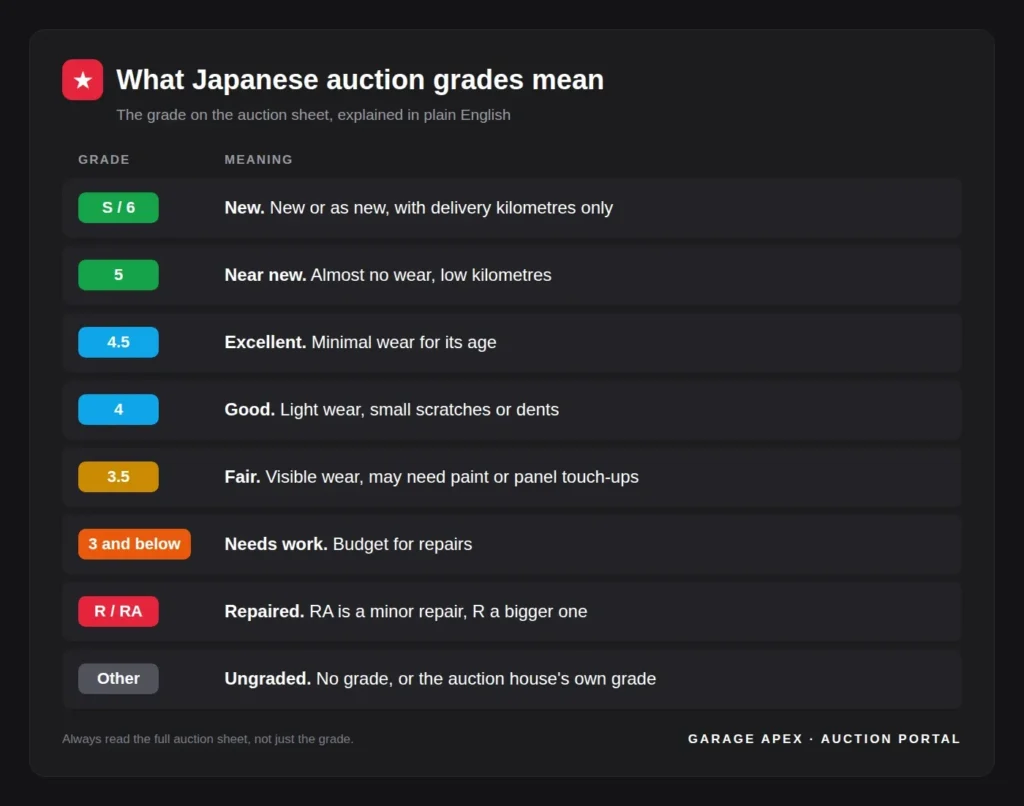
The grade is only a summary. Read the full sheet with our guide on how to read a Japanese auction sheet.
Prices change week to week
Auction prices move with demand. For 2022 AGH30 Alphards, the average sale price rose 7.3% over the 90 days to late October 2026. A price you saw two months ago may already be out of date, which is why the Price Guide only uses the last 3 months.
From auction price to landed price
The hammer price is only part of what you’ll pay. Shipping, customs, GST, compliance and our fee all come on top, and the total depends on the car.
For example, a 2022 Alphard with a market average of ¥3,117,000 (about $28,249) came to an estimated $41,093 landed in Australia. Our guide to the cost of importing a car from Japan explains each cost.
Before you bid, check the car is eligible on the government’s Specialist and Enthusiast Vehicles Register.
How to check prices yourself
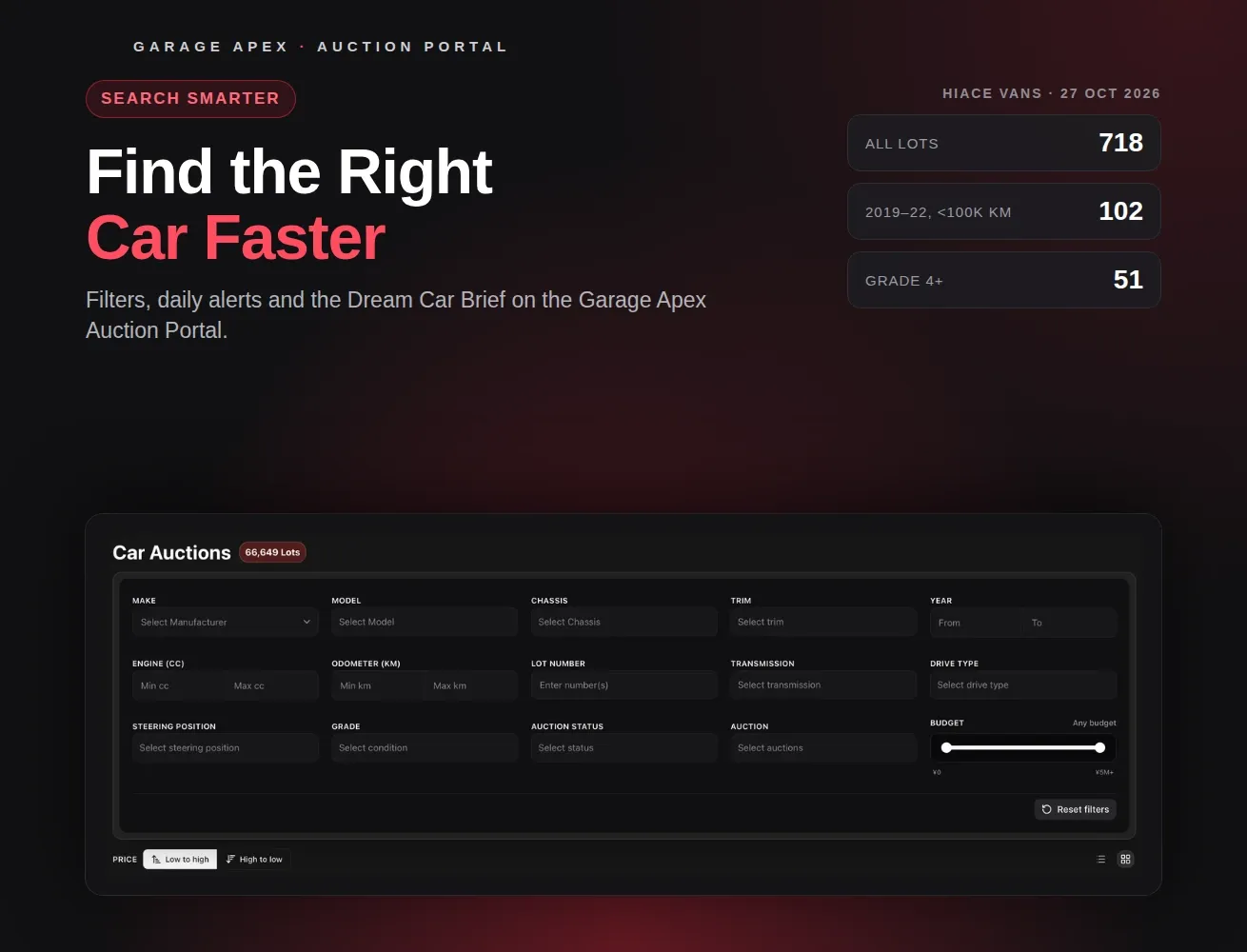
The Price Guide in the Garage Apex Auction Portal shows real hammer prices for any model:
- Choose the make and model, then narrow by chassis code.
- See prices by year and the typical sold price, free.
- On Standard ($10 a month), unlock the grade × kilometres grid, price range and sell rate, the bid checker, landed prices, the weekly trend and every sold car.
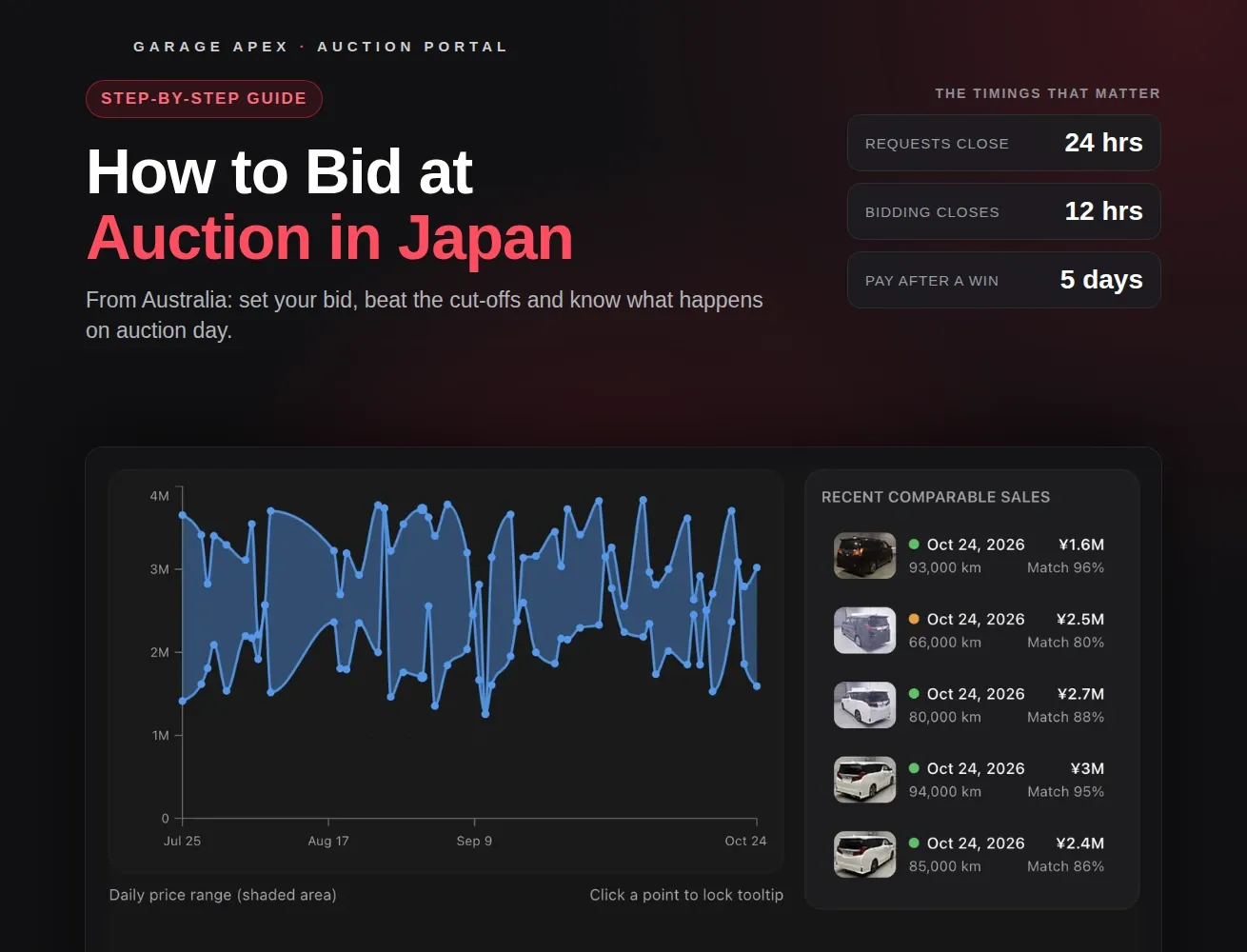
On any live lot, the market analysis estimates that car’s value from comparable sales, with 3 free analyses a day. When you’re ready, our guide on how to bid at auction in Japan shows how to turn a price into a bid. You can also browse live stock on our Japanese car auctions page.
Check any model’s real sold prices: create your free account
Frequently asked questions
What is a hammer price?
The price a car actually sold for at auction. It doesn’t include any import costs.
Why do so many cars start at ¥1,000?
The start price is just where bidding opens. Bidders quickly push the price up to the car’s real value.
How much does a car from a Japanese auction cost in Australia?
It depends on the car and its auction price. Shipping, customs, GST, compliance and fees all come on top, so the landed cost is always well above the hammer price. The Auction Portal estimates it in Australian dollars for every live lot.
Are Japanese auction prices going up?
It varies by model. For 2022 Toyota Alphards, prices rose 7.3% over 90 days to late October 2026. Check the trend for your model in the Price Guide
Where can I see Japanese auction sold prices?
In the Price Guide on the Garage Apex Auction Portal. Prices by year and typical sold prices are free.
Know the price before you bid
The start price is noise, and the asking price includes someone else’s margin. Real sold prices tell you what a car is worth and what to bid. Check them free in the Price Guide.
Create your free Auction Portal account
*Garage Apex – 54 Miller Street, Epping VIC 3076 | 1300 112 220 | VicRoads approved, ISO9001 certified*