

Knowing how to bid at auction in Japan matters, because auctions are where Japan’s used cars are sold, and you can’t just turn up and raise your hand. You need an agent, a maximum bid you’ve worked out properly, and to beat two cut-offs most first-time buyers don’t know about.
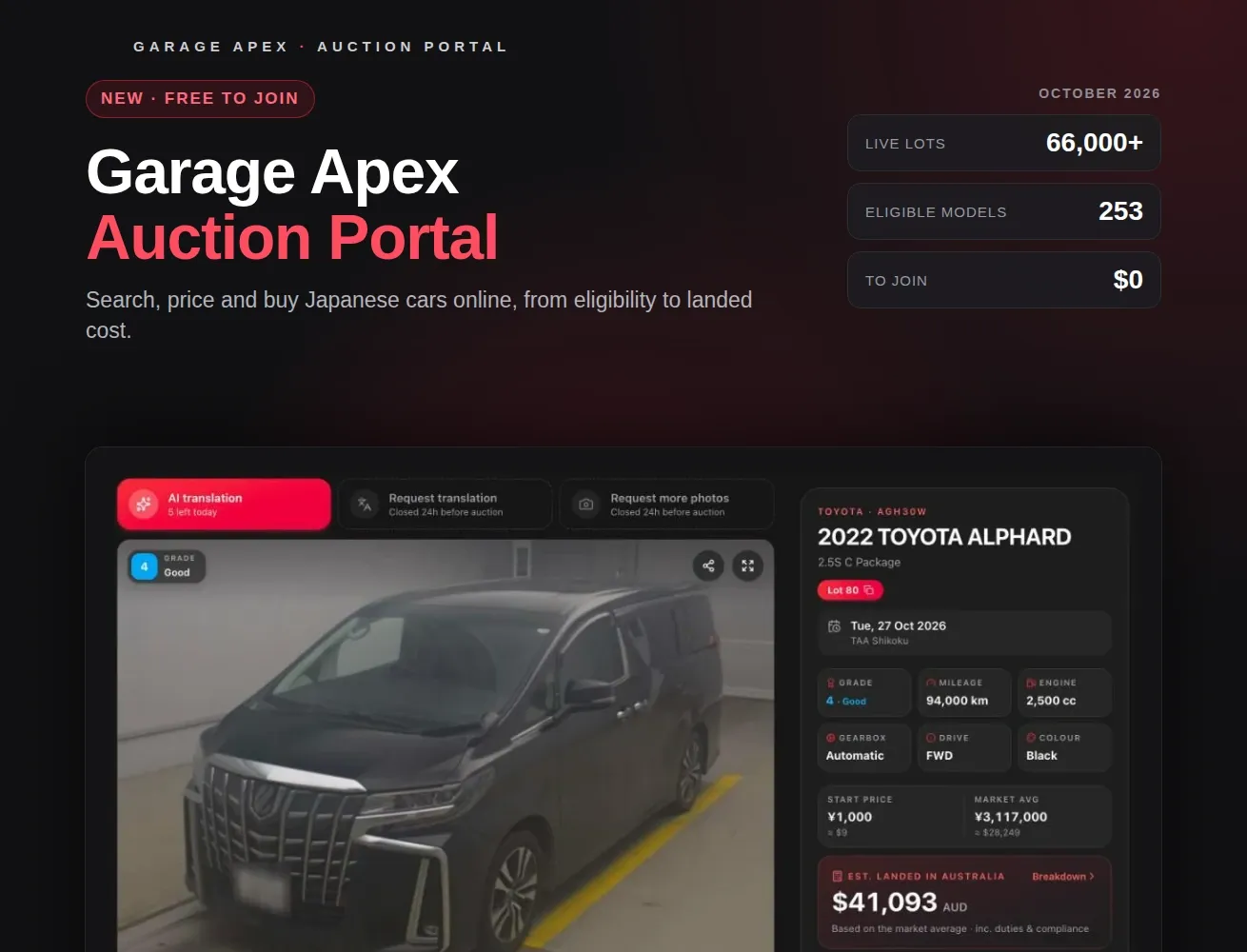
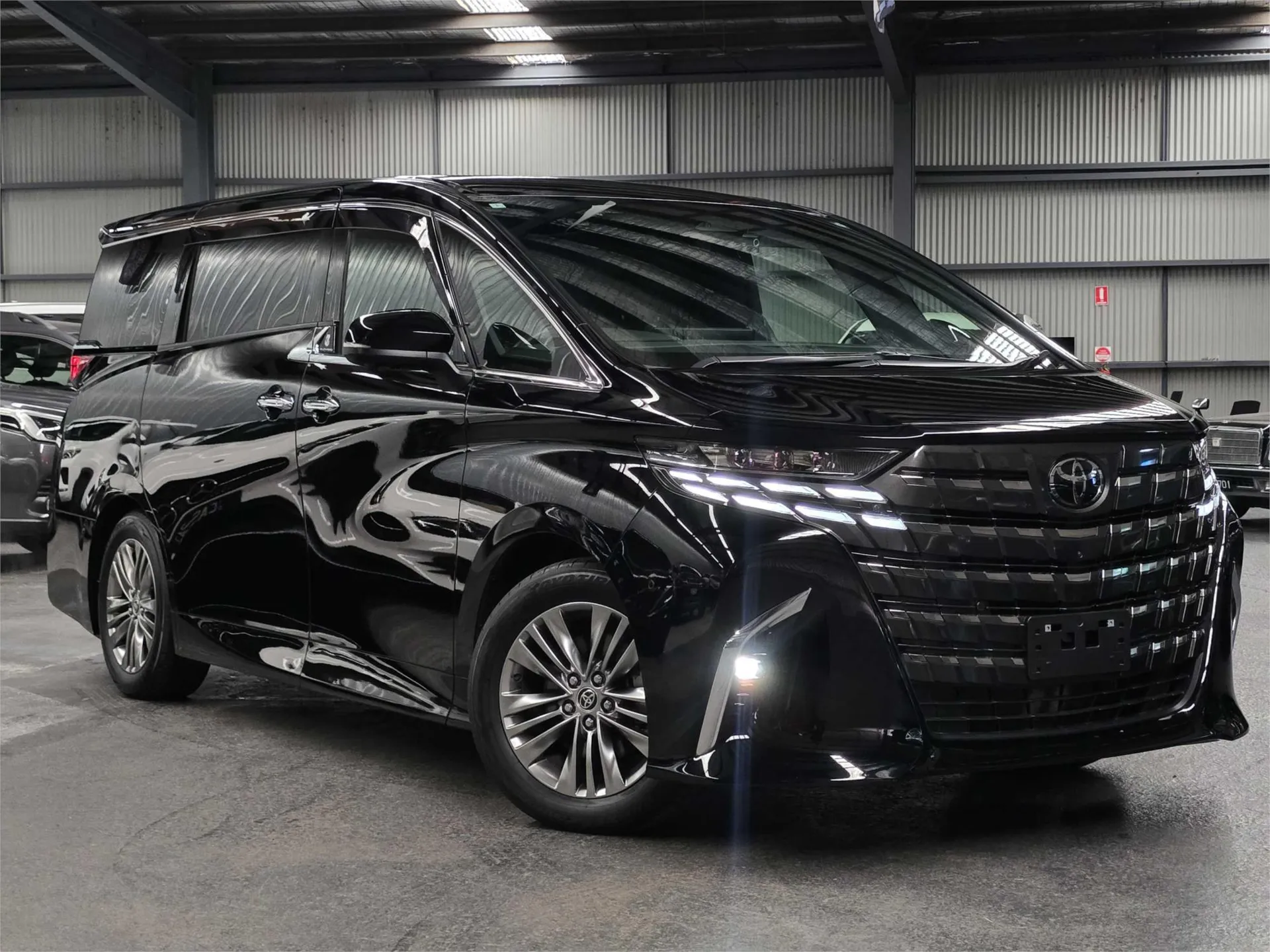
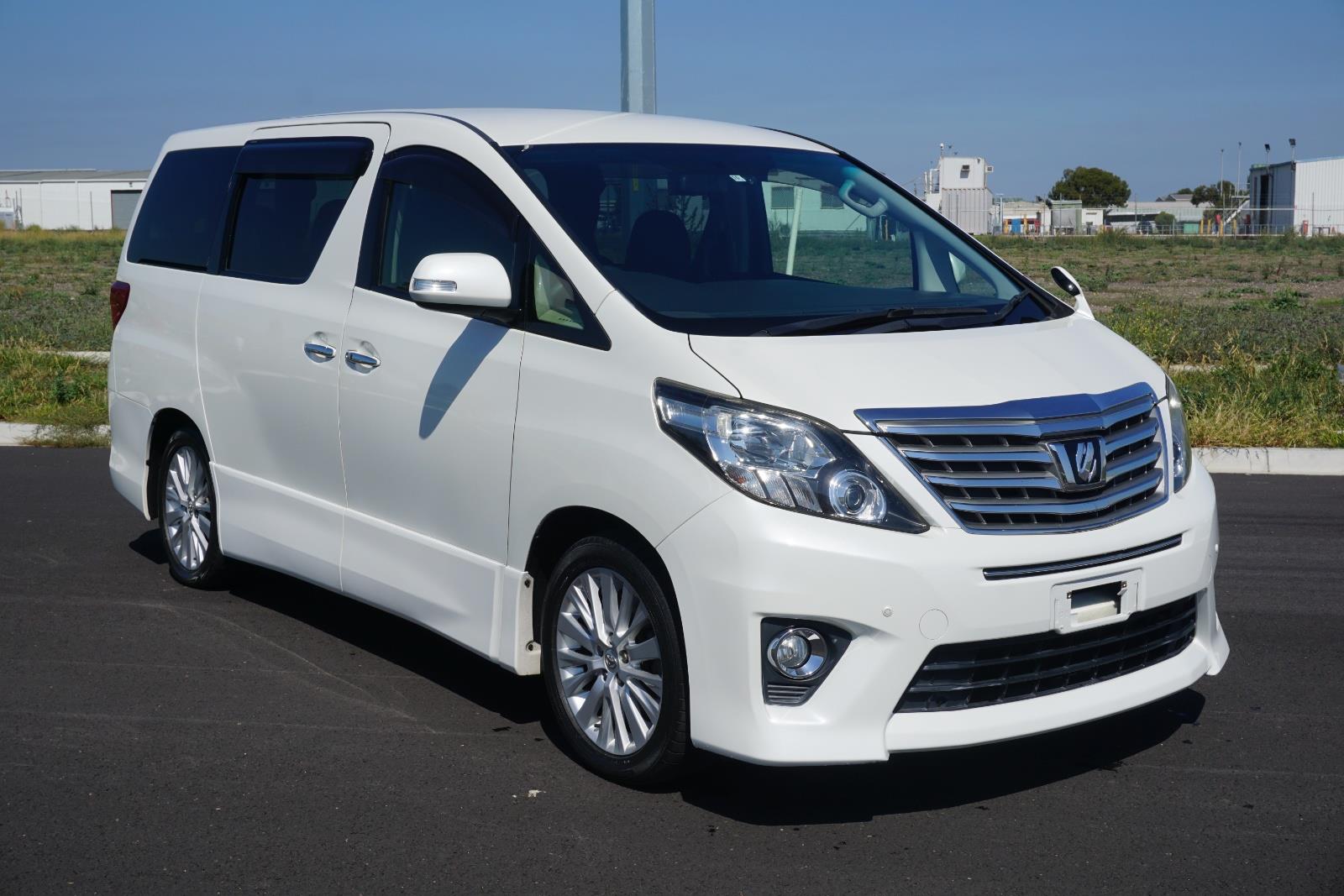
This guide walks through the whole bidding process using a real car: Lot 80, a 2022 Toyota Alphard 2.5S C Package, grade 4, 94,000 km, auctioned at TAA Shikoku on 27 October 2026. It’s the same car we followed in our Auction Portal guide.
How auctions in Japan work
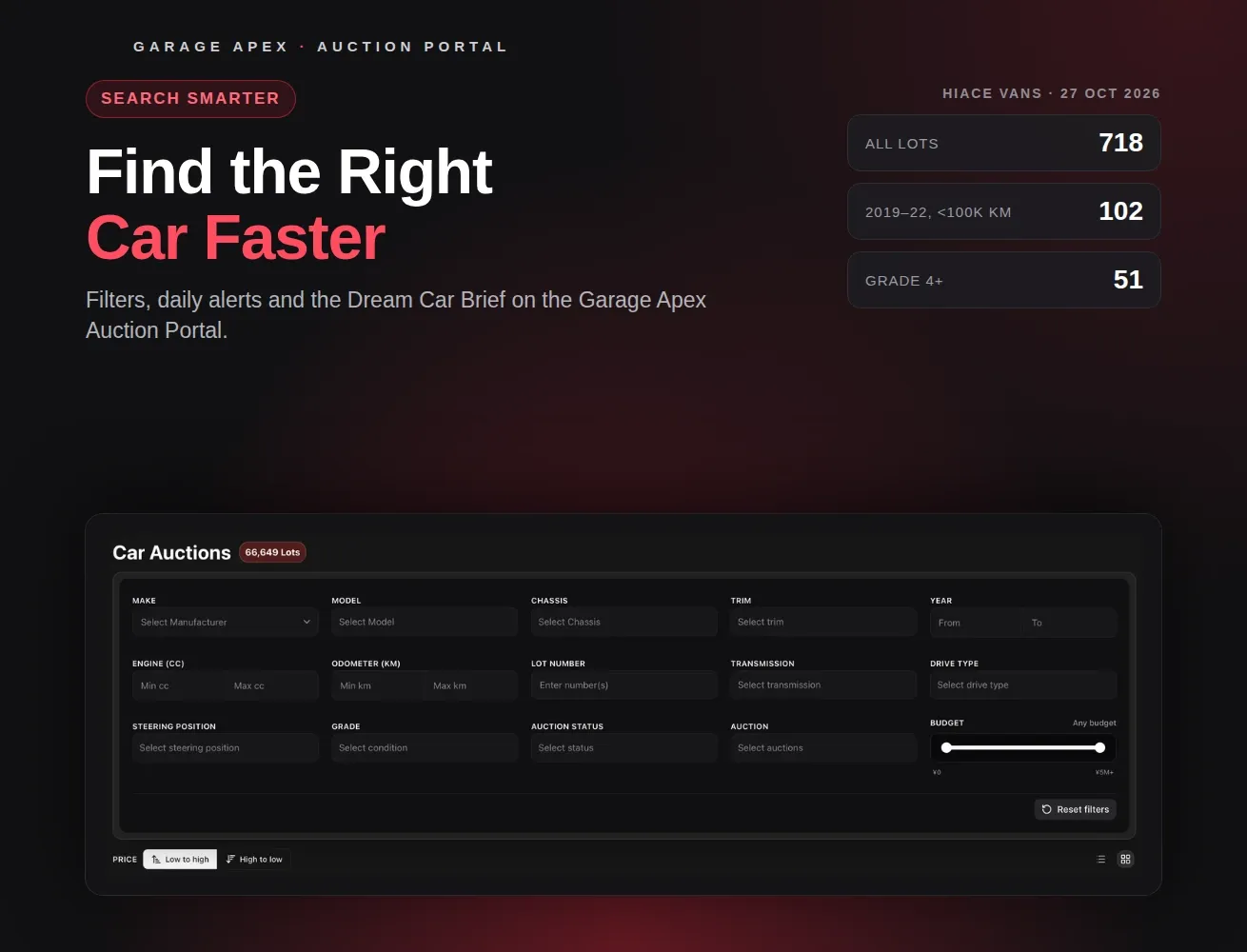
The Auction Portal lists more than 66,000 lots from auction houses such as USS, TAA and JU. Every car is inspected and given a grade and an auction sheet, then sold in a fast live auction, often in seconds.
Only registered members can bid, so buyers in Australia bid through an exporter or agent. With Garage Apex, you choose the car and place your bid in the Auction Portal, and our team places it at the auction for you. You can browse live stock on our Japanese car auctions page.
1. Choose the lot and check it
Start with a car that’s eligible to import and worth bidding on. In the Auction Portal, each lot shows its specs, the original auction sheet, a market analysis and similar cars.
You can also check eligibility on the government’s Specialist and Enthusiast Vehicles Register.
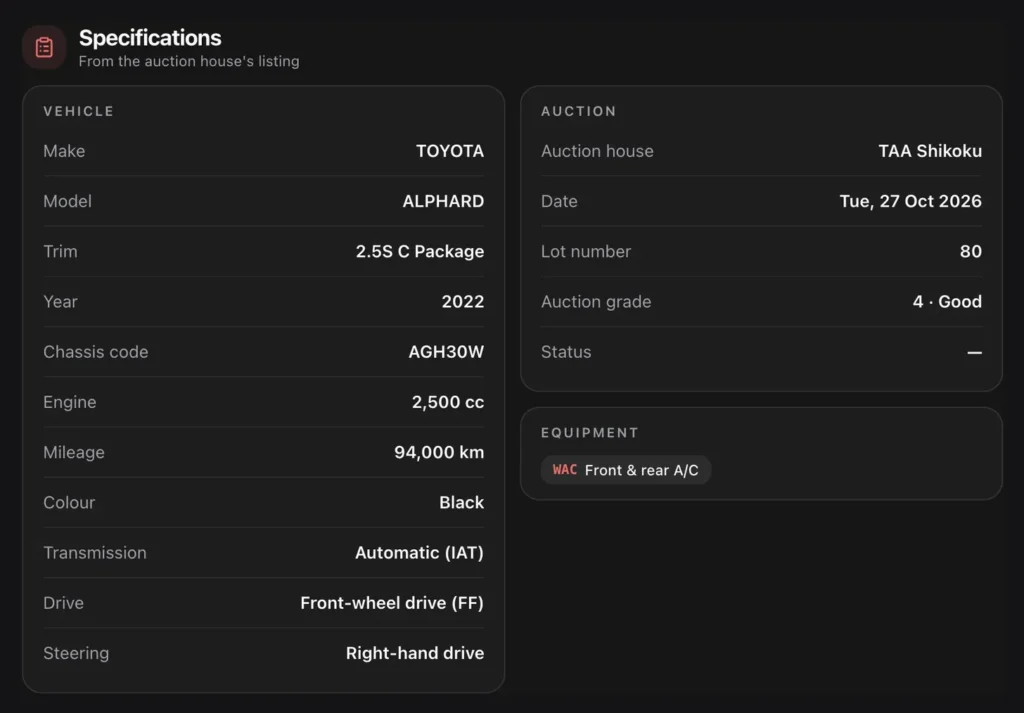
For Lot 80, the sheet showed normal grade 4 wear: small paint marks, light wear on the steering wheel and console, and a small seat tear. If you’re unsure what a sheet says, read our guide on how to read a Japanese auction sheet before you go further.
2. Work out your maximum bid
When you learn how to bid at auction in Japan, this is the step that decides whether you get a good car at a fair price. Two numbers matter: what similar cars actually sold for, and what the car will cost once it’s in Australia.
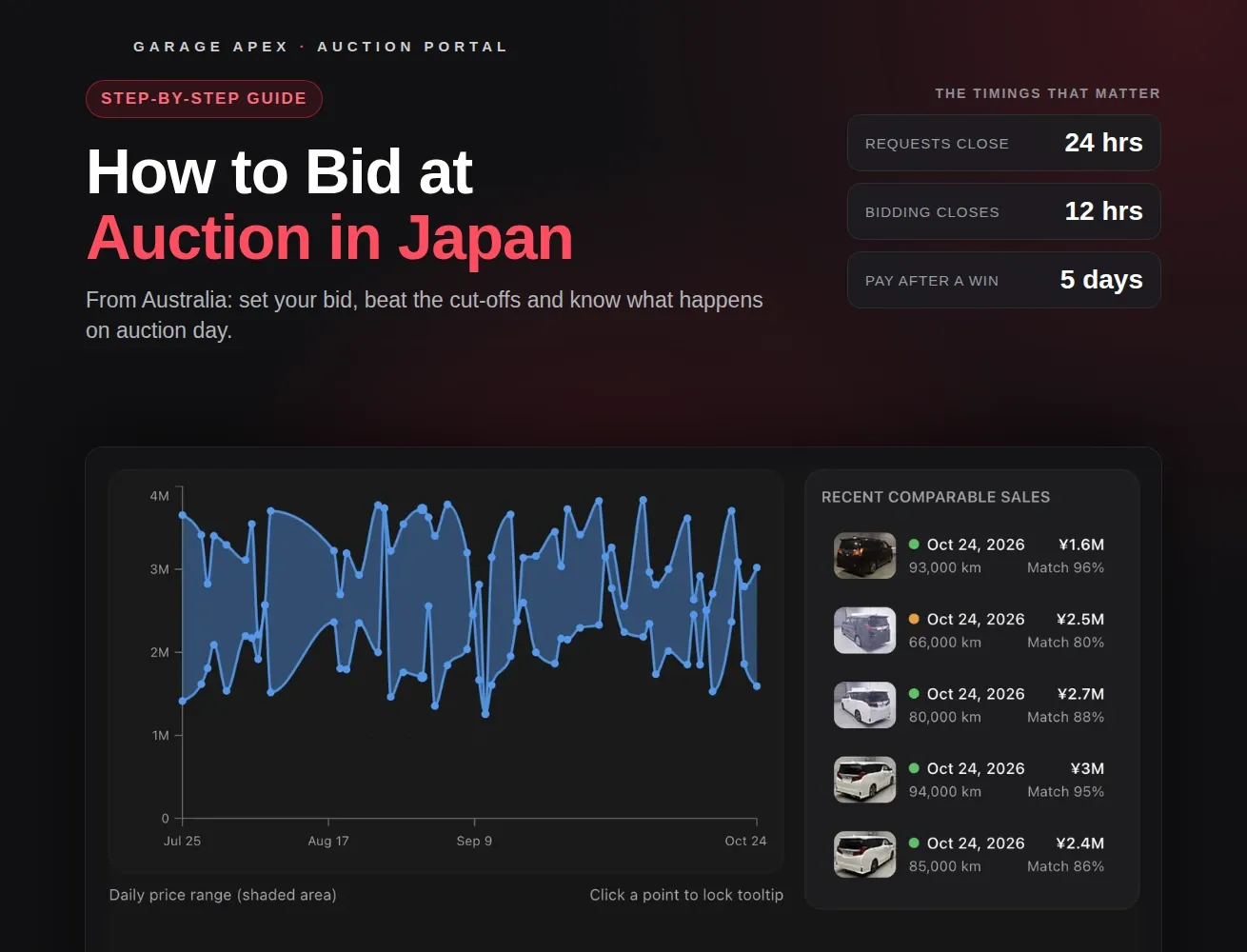
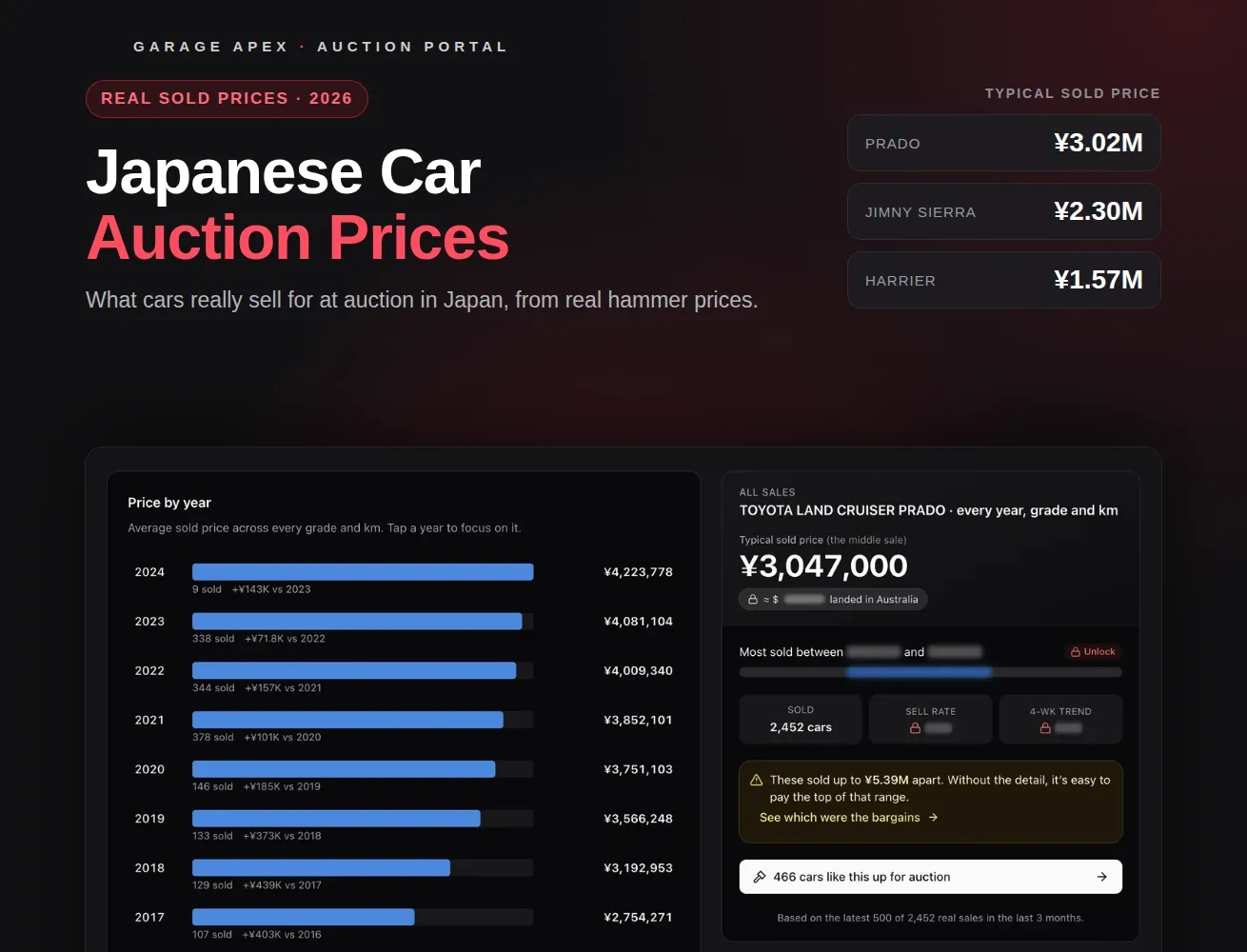
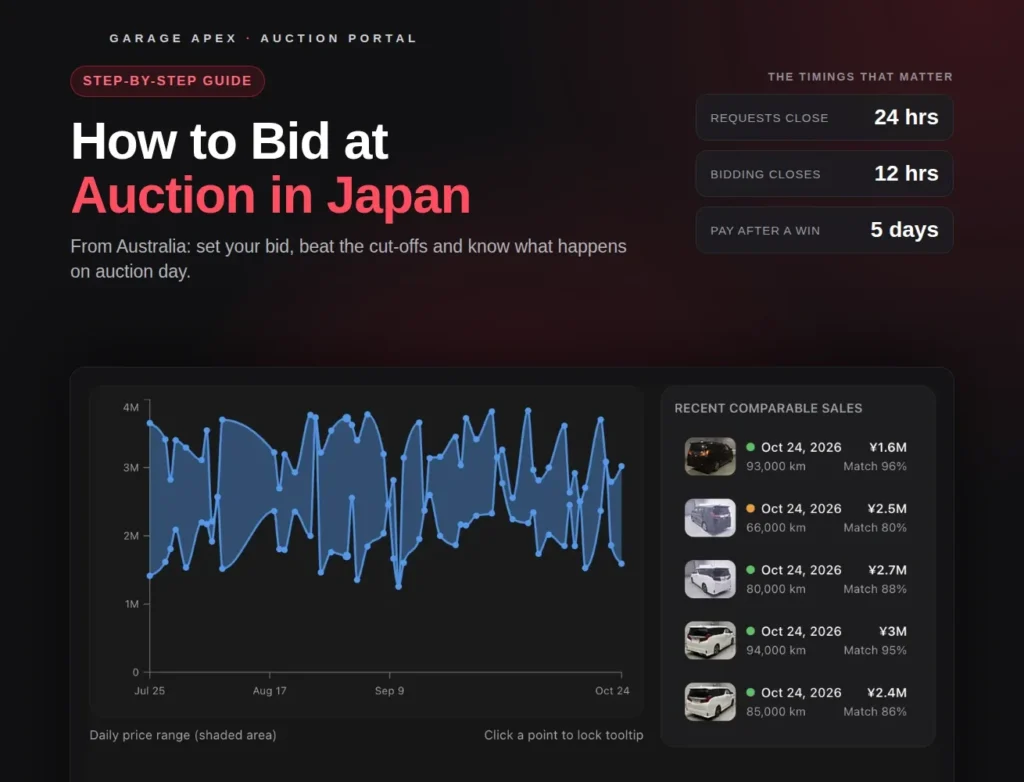
What similar cars sold for. Ignore the start price; many cars start at ¥1,000. The market analysis for Lot 80 estimated it at ¥2,579,426, with a likely range of ¥2.03 million to ¥3.12 million, based on 301 comparable sales. Recent comparable Alphards sold for between ¥1.6 million and ¥3 million.
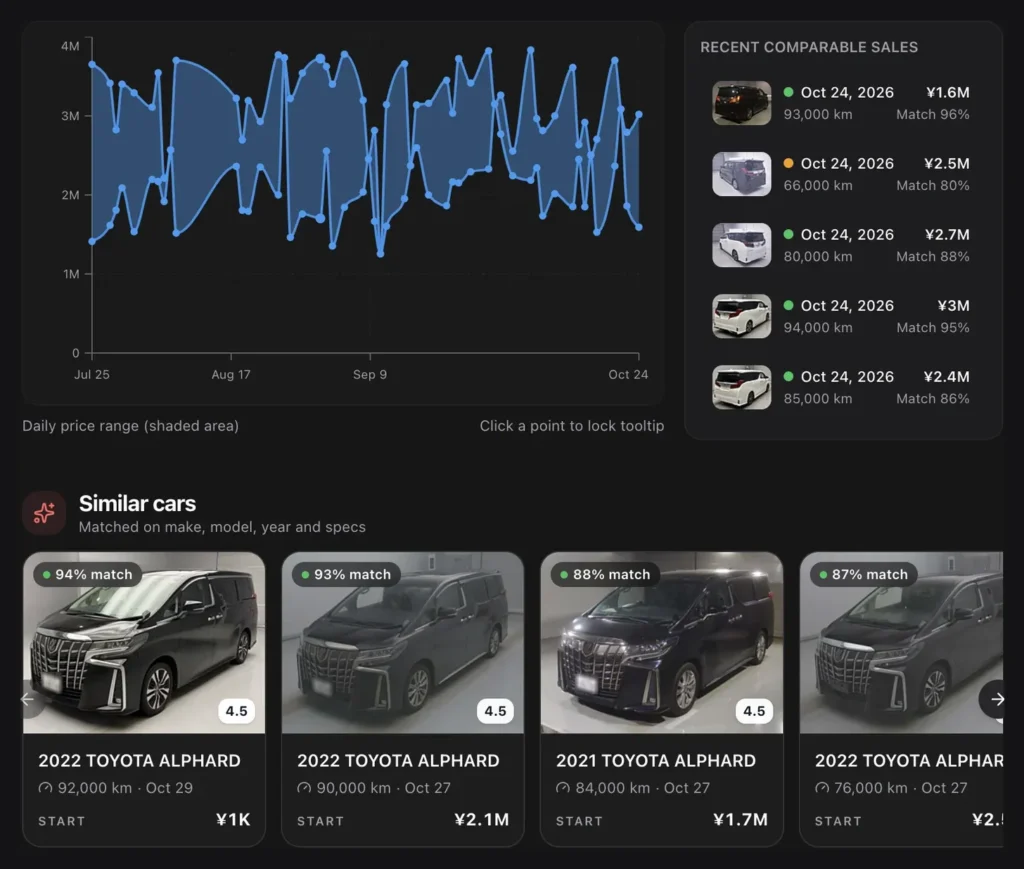
What it costs landed. The hammer price is only part of the bill. The Landed & Compliance Calculator turns the auction price into an FOB price (the car plus the export agent fee), then adds shipping, customs, heat treatment, compliance, towing, GST and our service fee, converted from yen at the live exchange rate. At the market average of ¥3,117,000, Lot 80 came to about $41,093 in Australia.
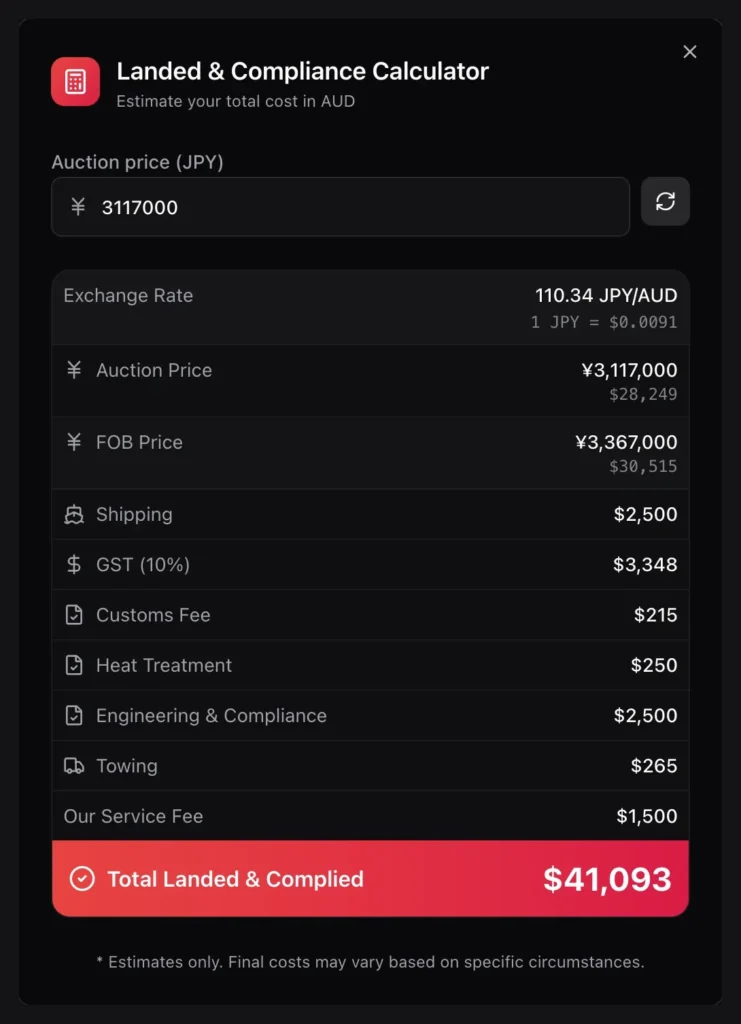
Work backwards from your all-in budget: decide the most you’ll pay landed, and the calculator shows the highest bid that fits. On Standard, the bid checker shows how many recent sales your bid would have won. Our guide to the cost of importing a car from Japan explains each cost.
3. Get the details before the cut-offs
Two deadlines catch out first-time buyers:
- 24 hours before the auction, requests for a human translation and extra photos close.
- 12 hours before the auction, bidding closes.
If a car interests you, ask for extra HD photos or a human translation of the sheet early. Both are available on Standard and Premium, and they’re worth it when the sheet leaves questions open.
4. Place your bid
The final part of how to bid at auction in Japan is placing the bid itself, and bidding is part of Premium. You can’t buy Premium online: contact our team to set it up, or get it free for a year when you pay a deposit on a quotation. Most buyers start that way, because paying the deposit also opens your import job in My Imports, and your bids are linked to it.
In short, the order is: quote, deposit, bid, win, then pay for the car within 5 business days.
On the lot page, enter your bid in yen. As you type, the portal shows the estimated landed price in Australian dollars. Your rep or our bidding team then places the bid at the auction for you, and your rep agrees your bidding budget with you first. You can bid on several cars at once, up to 200 bids a month.
Make it your best offer: once placed, a bid can’t be changed or withdrawn. Bid an amount you’re happy to win at, not one you hope to win under.
5. Auction day: win, lose or passed in
The car sells in seconds, and one of three things happens:
- You win. We email you and your rep contacts you about next steps. Payment for the car is due within 5 business days.
- You’re outbid. We email you, and nothing is owed. There’s always another one: when we checked, 173 similar Alphards were coming up for auction.
- It’s passed in. Bids didn’t reach the seller’s reserve, so the car didn’t sell. Your rep will tell you what happens next.
Lot 80 sold for ¥2,650,000 (about $24,000) [SAMPLE: replace with the real result], against the portal’s estimate of ¥2,579,426.
If you miss out, add the car to a Dream Car Brief and we’ll watch the auctions every day for the next match.
6. After you win
Settle payment within 5 business days of the win. Your quote in My Quotes shows the full cost breakdown, and your import job in My Imports lets you follow the car from Japan to your driveway. For shipping, compliance and registration, see our import process explained.
Auction or One Price?
Not every buyer wants to bid. One Price cars have a fixed price and go to the first buyer, so you know the cost up front, but you need to move quickly. Tap Buy now and we buy it for you at that price, then confirm as soon as it’s yours. Auctions usually offer more choice and the chance of a lower price, with less certainty. Buying One Price stock is part of Premium, like bidding.
Common bidding mistakes
Most problems people have when they learn how to bid at auction in Japan come down to a few avoidable mistakes:
- Bidding on the start price instead of real sold prices.
- Forgetting the landed costs, which can add thousands of dollars.
- Missing the 24-hour and 12-hour cut-offs.
- Bidding on a car before checking it’s eligible to import.
- Chasing one car instead of setting up a Dream Car Brief.
- Placing a bid you’re not sure about: bids can’t be withdrawn.
Find your car and set your bid: create your free account
Frequently asked questions
Can I learn how to bid at auction in Japan myself?
No. Only registered members can bid, so buyers in Australia bid through an exporter or agent such as Garage Apex.
When does bidding close?
On the Auction Portal, bidding closes 12 hours before the auction, and requests for translations and extra photos close 24 hours before.
Which plan do I need to bid?
Premium. Free and Standard are for research. Premium can’t be bought online: contact our team, or get it free for a year when you pay a deposit on a quotation.
What happens if I’m outbid?
Nothing is owed. You can bid on another car, or add the model to a Dream Car Brief so we watch for the next match.
Can I change or cancel a bid?
No. Once placed, a bid can’t be changed or withdrawn, so make sure it’s your best offer.
What does passed in mean?
The bids didn’t reach the seller’s reserve, so the car didn’t sell.
Ready to bid?
Now you know how to bid at auction in Japan: check the car, set your maximum from real sold prices and the landed cost, and get your bid in before the cut-off. Start free on the Auction Portal, and upgrade to Premium when you’re ready to bid.
Create your free Auction Portal account
*Garage Apex – 54 Miller Street, Epping VIC 3076 | 1300 112 220 | VicRoads approved, ISO9001 certified*